





-
Ph.D. Center -
Research -
Publication -
Student Research Publication -
Conference -
Research Ethics Policy -
Plagiarism Policy -
IPR -
Management Development Programmes -
Faculty Development Programmes -
Consultancy


Ph.D. Centre
A candidate holding Master’s degree with at least 55% marks in aggregate or its equivalent grade ‘B’ in the UGC 7 point scale (or an equivalent grade in the point scale wherever grading system is followed) or an equivalent degree from foreign educational institution accredited by an Assessment and Accreditation Agency which is approved, recognized or authorized by an authority established or incorporated under a law in its home country or any other statutory authority in that country for the purpose of assessing, accrediting or assuring quality and standards in educational institutions.
Eligibility
Relaxation of 5 % marks or equivalent relaxation of grade shall be allowed for those belonging to reserved categories / differently abled and other categories as per the policies of Government of Maharashtra prescribed time to time.
ORA person whose M.Phil. dissertation has been evaluated and viva voce is pending may be admitted to PhD programme at the same centre.
ORA candidate possessing a degree equivalent to M. Phil. From Indian institution or foreign educational institution accredited by an Assessment and Accreditation Agency which is approved, recognized or authorized by an authority established or incorporated under a law in its home country or any other statutory authority in that country for the purpose of assessing, accrediting or assuring quality and standards in educational institutions.
ORCandidate possessing PhD degree from recognized university as per the guidelines issued by UGC from time to time
Duration of the Programme: – Minimum 3 years & Maximum 6 years Intake: 24 Admission Process:PhD entrance test (PET) conducted by University of Mumbai & admission interviews.
To know more about PET, exemption for PET, interview process please visit:- https://mu.ac.in/wp-content/uploads/2015/07/M.Phil-Ph.D-VCD-947-of-2018-re-promulgated.pdfMeet our Supervisors:
-
Dr. Ramakumar Ambatipudi
-
Dr. Suchi Gautam
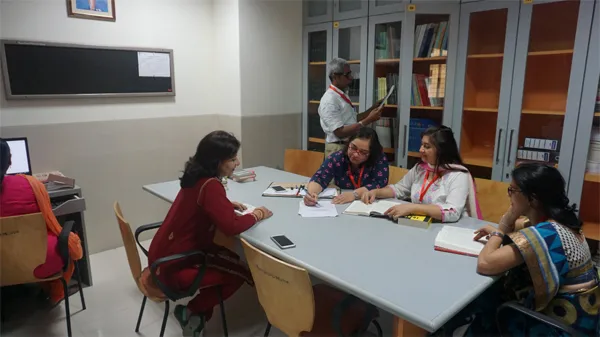
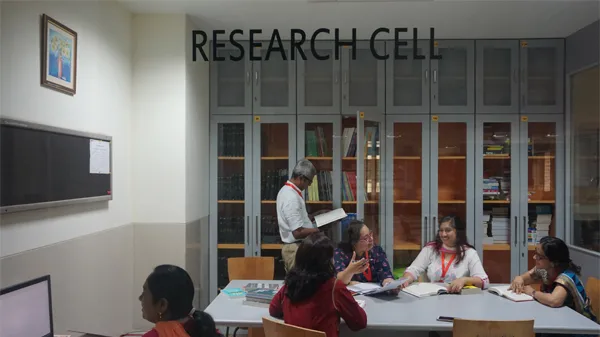
Research Cell
Objectives
- To guide students and faculty members for Research Area identification at PG/Research Level through Quality R&D projects using proper research methodology.
- To establish research centers with approval from competent authority in the area of management
- To organize International and National Conferences for brand building and encourage faculty members for quality publication on regular basis in reputed national and international journals.
- To organize MDPs in collaboration with Industry/Institute in all specializations as per NBA/NAAC guidelines
- To organize Faculty Development Programme for initiating Research activities like ‘Research Methodology’ and to motivate faculty for departmental and interdisciplinary Research
- To create a platform to attract collaborative and sponsored research projects from Government agencies, industry and academic partners/ National & International
- To apply and derive funds under minor/major research grants
- To elevate the level of Collaborative Research leading to a) Consultancy projects b) IPR c) MDP
- To explore avenues for networking with foreign universities culminating into Research activities
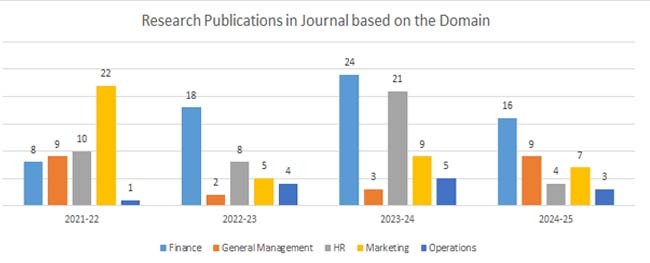
Consolidated Publications
Case Study
Journals
Books / Book Chapters
Conferences and Proceedings
Student Publications
INDEX
For Full PDF (click here) | ||
Section 1: Sustainable Finance & Responsible Investment | ||
Ch. | Title & Authors | Page |
1 | Behavioural Finance and Investment Decisions of Working Women Towards Indian Stock Market | 1 |
2 | A Study on Impact of Behavioral Finance in Investment Decision Making | 18 |
3 | The Impact of FOMO on Investment Behavior: A Behavioral Finance Perspective | 27 |
4 | ESG Investing & Behavioural Trends Among Gen Z Investors | 38 |
5 | Investor Confidence and the SafeHaven Role of Green Bonds: A Market Dynamics Study | 47 |
6 | Cybersecurity and Consumer Trust in AI-Driven Fintech | 63 |
7 | From Automation to Intelligence: Evaluating the Impact of AI on Financial Reporting | 70 |
Section 2: Green Consumerism & Marketing Innovation | ||
8 | Consumer Perception and Adoption of Zero Waste Products | 90 |
9 | The Financial Impact of Influencer Marketing on Consumer Tourism | 104 |
10 | A Study on Influence of Customer Engagement on Instagram | 112 |
11 | The Impact of Social Media on Young Investors’ Decision-Making | 122 |
Section 3: People, Work, and Sustainable HR Practices | ||
12 | Bridging the AI-HR Gap: Exploring the Untapped Potential of AI in HR | 133 |
13 | Where Does Gen Z Thrive: A Study on Work-from-Home vs. Office Work | 144 |
14 | Gig Economy & HR – Managing Freelancers and Contract Workers Effectively | 159 |
Section 4: Financial Literacy & Digital Inclusion | ||
15 | Financial Literacy and Saving Behaviour | 169 |
16 | Exploring Financial Literacy in Higher Education | 184 |
17 | Barriers to Digital Payment Adoption in Rural India | 199 |
18 | Impact of UPI Payment Crashes | 212 |
19 | Enhancing AI and ML Transparency in Financial Risk Management | 224 |
Section 5: Operations, Technology & Inclusive Growth | ||
20 | The Impact of Quick Commerce on Consumer Buying Behavior | 234 |
21 | Faster Deliveries, Faster Decisions – Analysing the Q-Commerce Effect on Consumers | 244 |
22 | The Multifaceted Role of Microfinance: Examining Economic Development and Women’s Empowerment in India | 259 |
23 | Exploring The Usage Frequency and Adoption Drivers of Q- Commerce Platforms | 268 |
RESEARCH ETHICS GUIDELINES
All education, research and innovation endeavors at TIMSR should aim to be of a high standard. To achieve the high-quality research outcome, the following policies pertaining to research ethics has been undertaken. A research ethics Committee (REC) has been constituted to design and implement policies regarding the ethics pertaining to research projects, publications, intellectual property, innovation, funding proposals and any other activity or act in which research is involved. This guideline (which will be referred as Code of Research Ethics i.e. CRE) offers provisions pertaining to ethical issues.
Establishment of research, publication ethics Committee (REC)
The REC Cell comprise of the following members
- Coordinator – Faculty of TIMSR
- 2 Members – Faculties of TIMSR
*Coordinator should have Doctoral degree (Ph.D.).
Responsibilities
Oversee the application of the Code of Research Ethics (CRE) for the responsible practice of research. The REC should also suggest modifications in policy and CRE on periodic basis.
Step-by-step process can be added explaining how faculty and students can apply for ethical approval, including whom to contact and expected timelines.
Role of REC in terms of actionable are as follows: –
- guiding researchers on ethical matters / categorizing the research in the risk band (refer sub section 7,1),
- reviewing and offering (dis)approval to those research falling under high risk category,
- sensitize faculty and students about ethical aspects of doing research.
Terms of Office
- Members of the REC serve for terms of up to two years.
- An appointed member may be appointed to serve for additional terms as per the approval of Director, TIMSR.
Quorum
The quorum for meetings of the REC shall be the nearest whole number above 50% of the membership of the REC.
Reporting
The REC will report to the Director – TIMSR by way of its minutes.
Code of Research Ethics (CRE)
This code expresses the ethical values of all faculties and students engaged in academic and/or research activities at TIMSR, who have committed themselves to:
- uphold the values of freedom, democracy, equality, human dignity and respect for diversity;
- strive for distinguished scholarship, excellence in teaching, reputable research and innovation through leading, challenging, creating and exploring knowledge.
- accomplish the above individually, through collective efforts and partnerships with communities.
- The purpose of the Code of Research Ethics (CRE) is to guide staff and students engaged in academic and research activities to:
- respect the human dignity and rights of all stakeholders.
- promote shared ethical values and fulfill all academic/research activities according to such values.
- uphold and promote individual, group and institutional integrity when in the process of fulfilling the roles as Professors, Guides, Researchers, Mentors and Advisors.
- create trust in the institution and the practice of business and management.
- the pursuit of truth through free inquiry and open dialogue.
- just and fair treatment of human beings, other living beings, the environment, and human remains.
- complying with the highest standards of scientific and management research.
- making no misrepresentation in the dissemination of research information and findings and not fabricating data or information.
- designating authorship of consulted research sources clearly, accurately and justly and assigning authorship of research publications accurately and justly.
- committing no form of plagiarism.
- practicing or promoting no form of unfair discrimination in research.
- disclosing the usage of Artificial Intelligence tools in their research work
Ethical Approval
All research activities undertaken by faculties and students of TIMSR should adhere to provisions stated in Section-6 of these guidelines.
The REC will facilitate researchers in obtaining ethical approval of their research study. All research involving human participants must be assessed for ethical risks and approved accordingly.
Risk Classification System
Research projects are classified into three categories based on the level of risk to participants:
- High Risk Projects
High risk projects involve significant potential for physical, psychological, social, economic, or legal harm to participants. Such projects include, but are not limited to:
- Research involving vulnerable populations (children, minorities, individuals with cognitive impairments, economically disadvantaged groups)
- Studies examining sensitive topics such as illegal activities, sexual behavior, substance abuse, or traumatic experiences
- Research that may cause significant psychological stress or emotional distress
- Studies involving deception that cannot be immediately debriefed
- Research that may result in social stigmatization or damage to reputation
- Collection of highly sensitive personal, financial, or health information
- Studies with potential legal implications for participants
- Research involving coercion or reduced autonomy in decision-making
- Medium Risk Projects
Medium risk projects involve some potential for harm or discomfort to participants, but with manageable risks when proper safeguards are implemented. Such projects include:
- Interviews about moderately sensitive business practices or workplace issues
- Research involving employees discussing organizational problems or management practices
- Studies examining financial decision-making
- Consumer research involving personal spending habits or financial situations
- Research on workplace stress, job satisfaction, or organizational conflicts
- Studies requiring more than minimal time commitment from participants
- Research involving audio or video recording of participants
- Studies collecting identifiable personal information that requires confidentiality protection
- Low Risk Projects
Low risk projects involve no more than minimal risk to participants, where the probability and magnitude of harm or discomfort anticipated are not greater than those ordinarily encountered in daily life. Such projects include:
- Anonymous surveys on general business topics
- Research using publicly available data or secondary datasets
- Observational studies in public spaces without intervention
- Analysis of publicly available financial reports or business documents
- Studies involving standard business simulations or educational exercises
- Research on general attitudes toward business practices, products, or services
- Non-sensitive interviews with professionals about industry trends or best practices
Ethical Approval Requirements
- All high and medium risk projects are recommended to obtain full ethical approval before commencing research activities. The REC will facilitate them in obtaining the ethical approval.
- Low risk projects are EXEMPT from formal ethical approval requirements, provided they meet the following eligibility criteria:
- The research collects data anonymously with no possibility of identifying individual participants, either directly or through combination of data points.
- The research does not involve sensitive subjects including but not limited to: illegal activities, financial difficulties, personal conflicts, discrimination, harassment, health issues, or other topics that could cause distress.
- Participants are adults with full capacity to consent, and the study does not specifically target or include vulnerable groups.
- The research requires minimal time and effort from participants (typically less than 30 minutes) and does not involve invasive procedures or techniques.
- For secondary data research, all data sources are publicly available, or the research uses existing anonymous datasets with proper permissions.
- Participation is entirely voluntary with no coercion, undue influence, or adverse consequences for non-participation.
- The research employs standard, non-invasive methods commonly used in business research (surveys, public observations, document analysis).
- If the personal data captured is not to be used to take any decision specific to a respondent or Data Principal (as per The Digital Personal Data Protection Act, 2023, Data Principal is defined as the individual to whom the personal data relates and where such individual is— (i) a child, includes the parents or lawful guardian of such a child; (ii) a person with disability, includes her lawful guardian, acting on her behalf.)
7.3 Ethical Committee Approval Process
If your research falls under high or medium risk category, then the researcher has to apply to REC to obtain the approval. The application is attached as an annexure 1 to this policy document. Please email the completed and signed application to the REC Coordinator, ensuring all other REC members are copied on the communication.
REC will call a meeting to discuss and process the request and deemed appropriate will offer approval. REC should convey its decision in 6 working days to the applicant.
Miscellaneous Guidelines
The REC has right to formulate other necessary guidelines relating to ethical aspects pertaining to publication, research grants, graduate research supervision, etc.
The REC will be responsible for suggesting changes on continual basis in Code of Research Ethics (CRE) and policies in line with The Digital Personal Data Protection Act, 2023.
Cilick here to Download Research Ethics
Intellectual Property Rights
Session by Ms. Pooja Shah
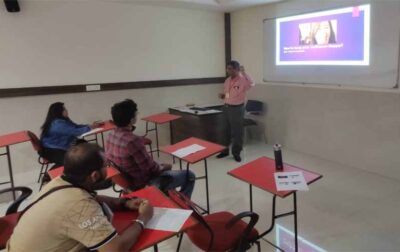
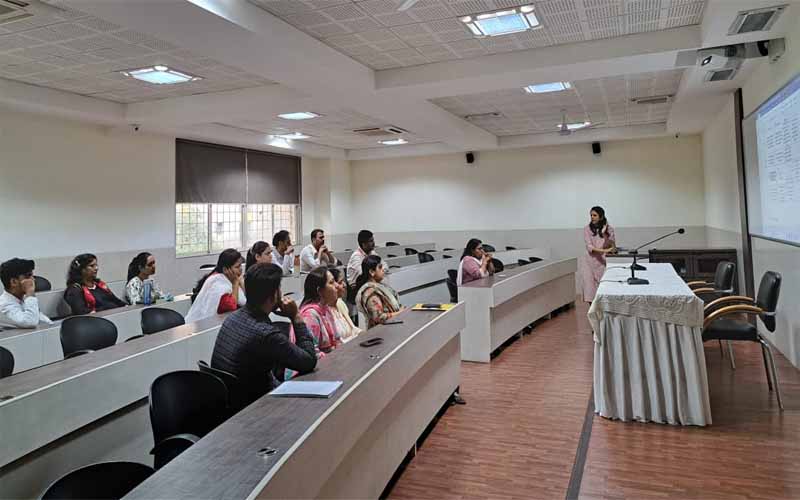
TIMSR’s Research Cell organized an IPR Workshop on “Trademark and Copyright Filing” on 28th February 2026 for Sem-II students (Batch 2025–27) and faculty members. The session was conducted by Ms. Pooja Shah, who shared insights on the significance of Intellectual Property Rights in a knowledge-driven economy. She explained the basics of trademarks and copyrights and guided participants on the process of filing and protecting intellectual creations.
The workshop aimed to create awareness about innovation ethics, responsible research practices, and safeguarding intellectual work. The interactive session enabled participants to gain practical knowledge on protecting their ideas, projects, and creative contributions in academic and professional settings.
Session by Dr. Bharat N. Suryawanshi
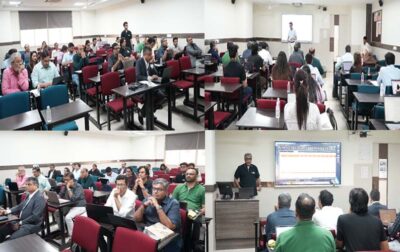
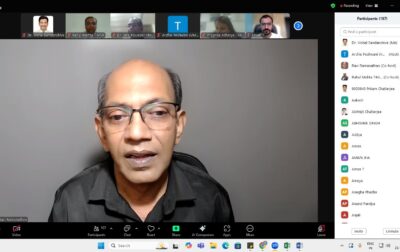
Thakur Institute of Management Studies and Research (TIMSR) conducted an online workshop on IPR & Patent and Design Filing on 15th July 2025, in collaboration with RGNIIPM, Government of India, Nagpur, under the National Intellectual Property Awareness Mission (NIPAM). Dr. Bharat N. Suryawanshi, Assistant Controller of Patents & Designs at RGNIIPM, was the keynote speaker.He shared expert insights on the fundamentals of Intellectual Property Rights, patent and design filing processes, documentation, and timelines. Participants learned about drafting patent specifications, filing procedures, and avoiding common pitfalls. The workshop empowered faculty, researchers, and students to safeguard their innovations and research outcomes. Over 100 participants actively engaged in an interactive Q&A session.
The session emphasized integrating IPR awareness into academic institutions. It also promoted innovation and entrepreneurship by highlighting the benefits of protecting intellectual assets.
The workshop concluded with a vote of thanks and a call to action for participants to take IPR filing seriously. The event was highly appreciated for its relevance, clarity, and expert-driven content.
Session by Prof. Surya Narayan Panda
TIMSR’s Research cell organized a session on the topic “Intellectual Property Rights” on 21st March, 2023 via online mode for the faculty members. The speaker for the session was Prof. Surya Narayan Panda, Professor and Executive Director (Research), Chitkara University, Punjab, India. During the session, Prof. Surya Narayan Panda discussed the concept and importance of Innovation, Patent, Trademark and Copyright in management domain. He also discussed his innovations such as Smart portable intensive care unit, Patient lifting system, E-DEEWEEDER, smart cap surveillance, Bhugoal. The session was also attended by the advance learner’s students of batch.2022-2024.
Session by Dr. T. Pawankumar
TIMSR organized a guest session on “Intellectual Property Rights (IPR)” on 19th January 2022, Wednesday for the MMS Semester III students (Batch 2020-22). Dr. Pankaj Natu, Director, TIMSR welcomed the resource person of the session Dr. T. Pawankumar.
Resource person Dr. T. Pawankumar, Senior Scientist and Assistant Professor at CSIR Institute of Minerals & Materials Technology enlightened the students and faculty members on the following points:
- Introduction to IPR
- Evolution of IPR
- Types of IPR
- Role of IP as Intangible property
- Significance of IP in business management
Overall the session was highly informative and interesting and has given a boost of knowledge and clarity on the topic. The students and faculty members participated enthusiastically.
Session by Advocate Vijay Sharma
Advocate Vijay Sharma, practicing lawyer in Mumbai High Court conducted a seminar on the topic ‘Introduction to Intellectual Property Rights’ on 16th March 2019. Adv. Sharma discussed various types of Intellectual properties like Patent, Copyright, Designs, Trademark, Geographical Indications, etc.

Objective
- To attain excellence in this dynamic and competitive environment
- To step-up the competence of the participants and thereby assist their career progression
- To contribute towards sustainable growth for organizations by empowering employees with better managerial skills
Our resources
- We have the best-in-class faculty with a blend of corporate as well as academic experience. Our methodology includes interactive training, case studies, audio-visual tools
Our effectiveness
Our experts help identify the core development areas across the value chain and provide standardised as well as tailor made solutions to elevate the personnel and thereby the enterprise
We provide comprehensive training programmes in areas including
- Finance
- Marketing
- HR
- Operations
- Soft Skills
- Personality Development
Five-Day Faculty Development Program on AI in Education
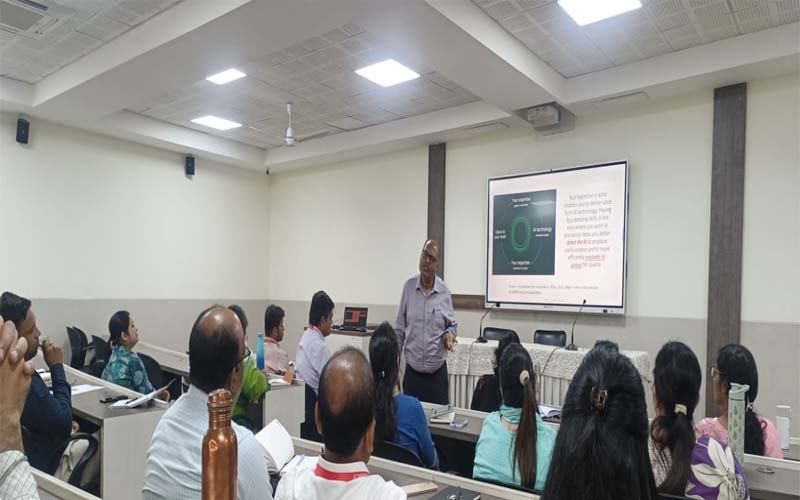
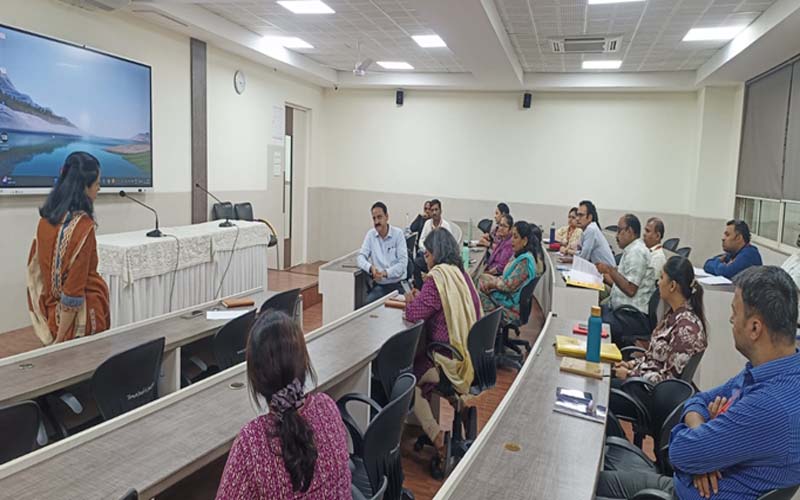
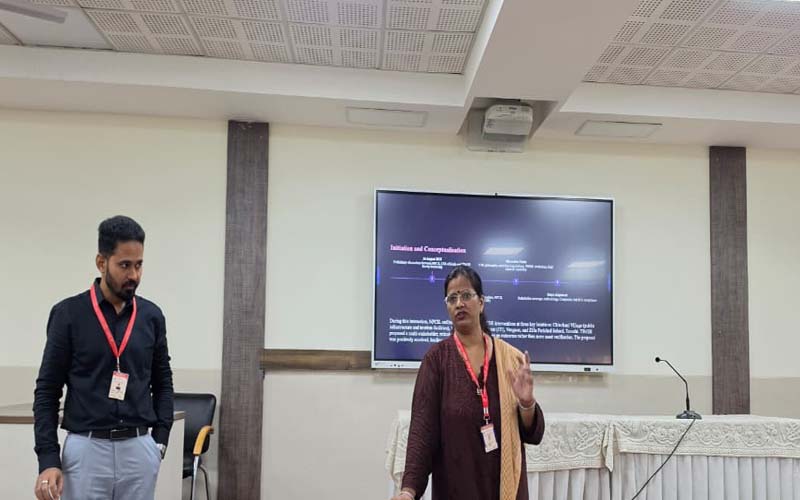
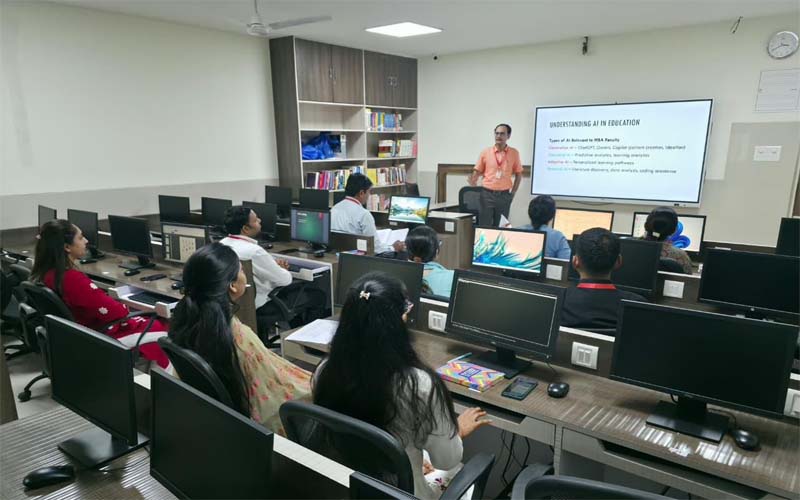
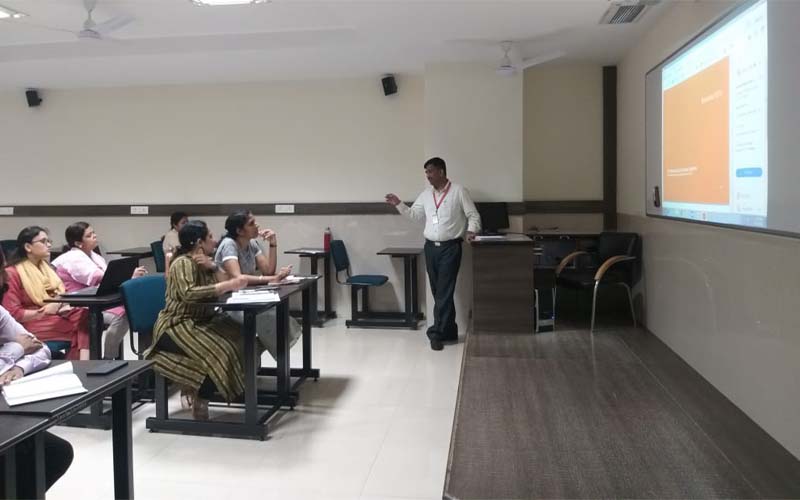
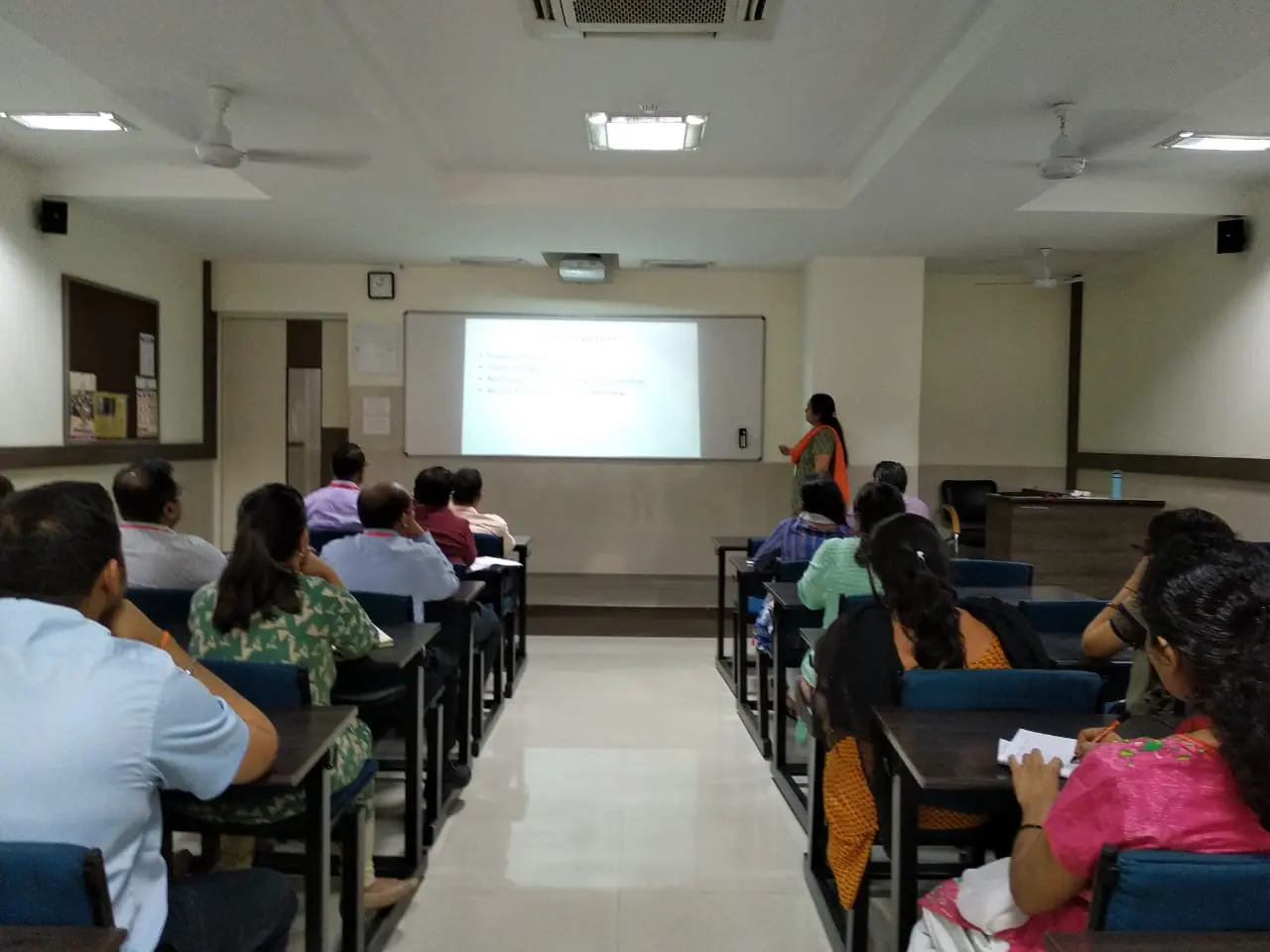
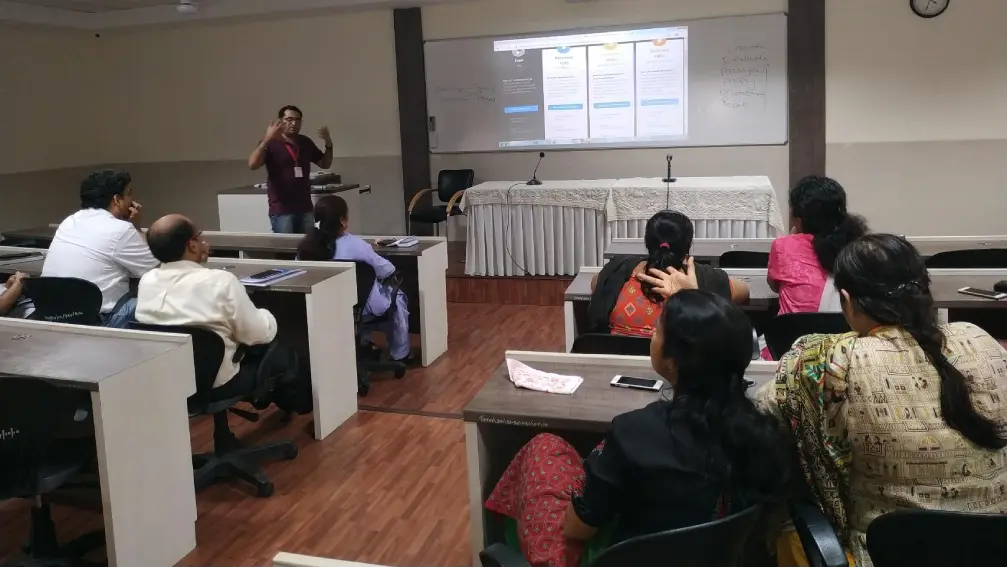
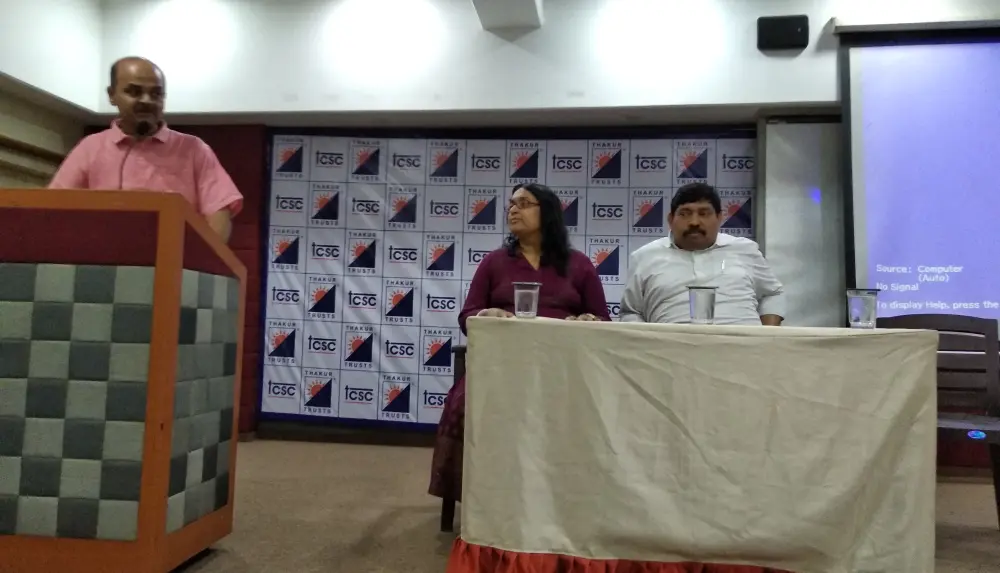
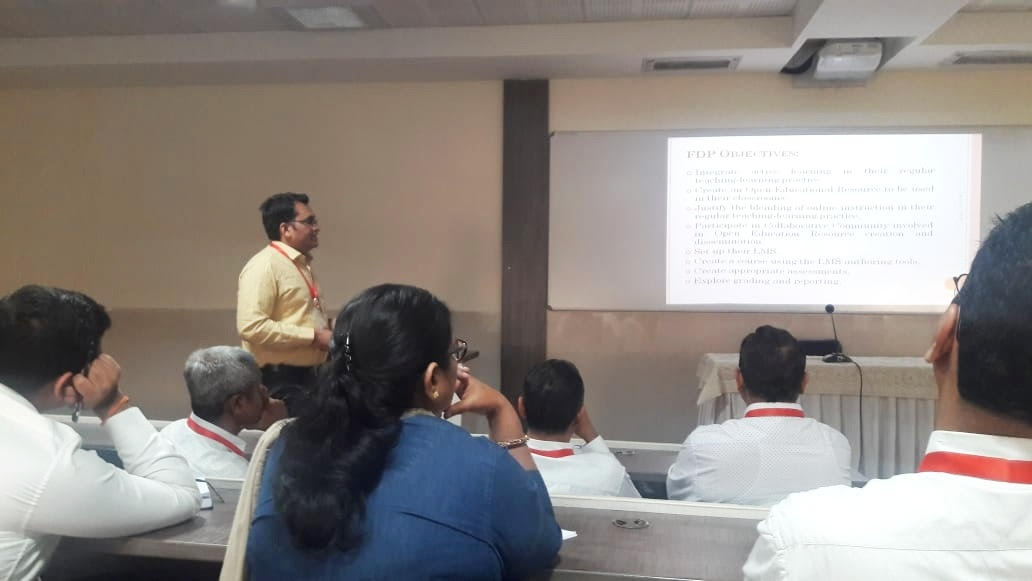
TIMSR conducted a five-day Faculty Development Program (FDP) on “AI in Management Education – Engaging Gen Z / Alpha with Innovative Teaching-Learning Pedagogy and Research” from July 28, 2025 to August 01, 2025. The FDP was inaugurated by esteemed speakers Dr. Rishi Jagmohan Singh, President- Bombay Management Assn | Global Head- L&D- Digital ICF- PCC and Ms. Krinal Donda, Co-founder of Digi-Utopia and witnessed active participation from faculty members across departments. Over five days, the sessions covered a wide spectrum of themes including AI in education, personalized learning, AI tools in teaching, ethical considerations, optimizing operations, AI in student support services, and the future of AI in higher education. The concluding day focused on understanding the learning behavior of Gen Z and Alpha students, with emphasis on redesigning instruction for improved engagement and fostering a collaborative and inclusive AI-driven classroom culture. Overall, the FDP served as an enriching platform for knowledge enhancement, idea exchange, and building faculty capabilities to meaningfully integrate AI in teaching and research practices.
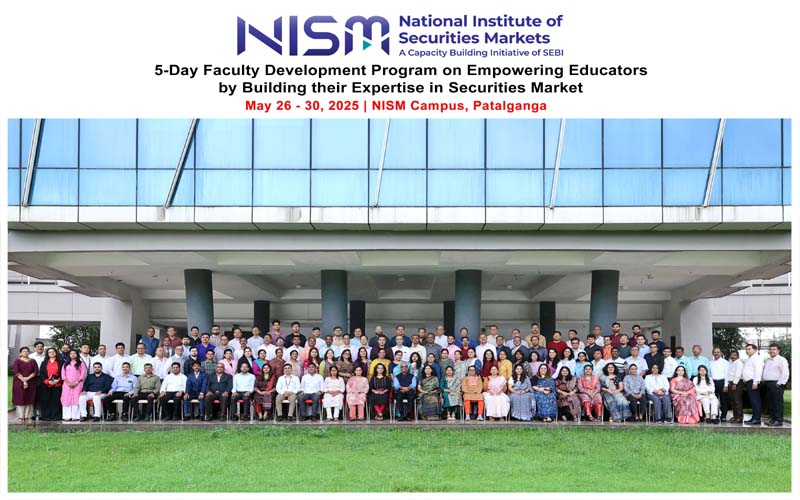
5-Day Faculty Development Program on Empowering Educators by Building their Expertise in Securities Market
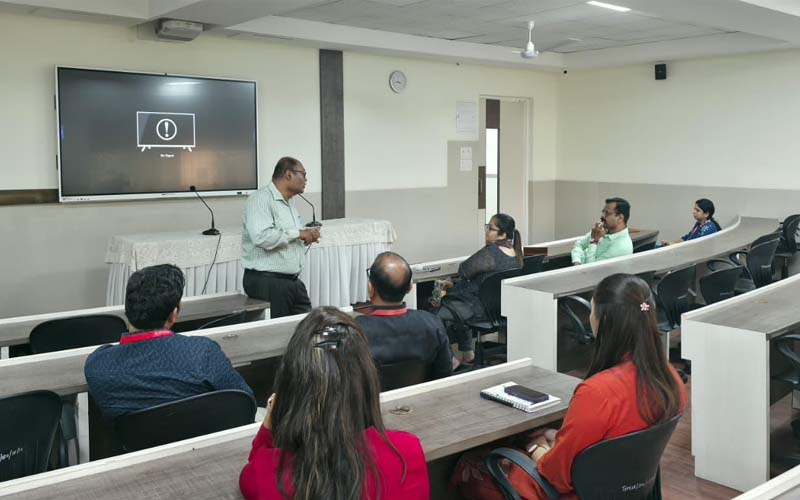
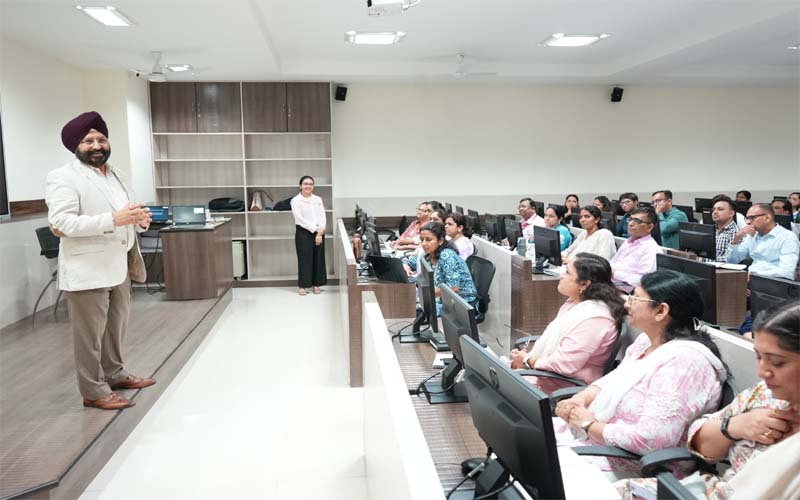
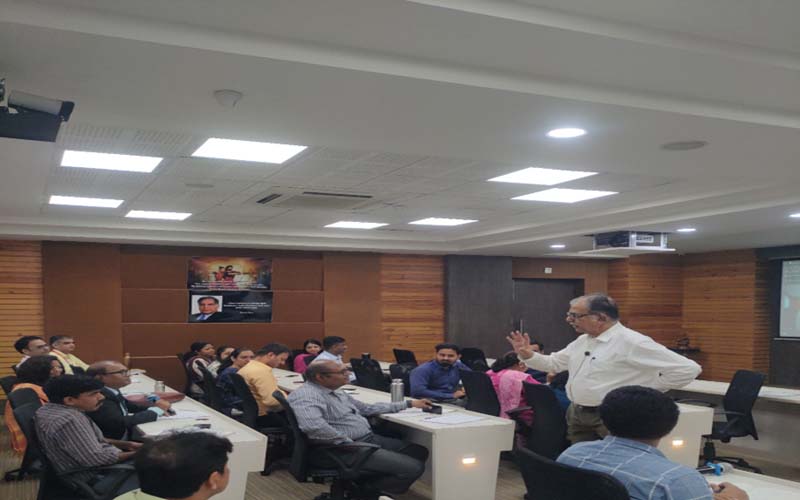
Dr. Chitra Gounder (Professor) and Mr. Gunwant Awasthi(Assistant Professor) from the Finance Department of TIMSR, attended a 5-day Faculty Development Program on ‘Empowering Educators by Building Their Expertise in the Securities Market’ at the NISM Campus, Patalganga from 26th May to 30th May 2025. The details of the FDP are given below.
Key Topics Covered
The sessions were conducted by senior NISM Faculties, SEBI representatives, market practitioners, and academicians. The major areas covered included:
Day 1 Introduction to Financial Markets in India, SEBI’s Role and Regulatory Framework
Day 2 Mutual Funds Industry: Structure, Product Types, and Regulatory Environment
Day 3 Equity Derivatives: Futures, Options, Hedging Strategies
Day 4 Data Science Applications in Finance –Financial Data Analysis
Day 5 Investor Education & Financial Literacy, Pedagogical Tools, and Assessment Techniques
Learning Outcomes:
- Gained in-depth understanding of the regulatory structure of financial markets in India.
- Learned about mutual fund product design, and investor rights.
- Developed practical insights into the functioning and risk management of equity derivatives.
- Teaching tools of different topics was provided, which will be useful for better delivery in the class
Pedagogical Implications
- Will incorporate real-time market data analysis in subjects like Security Analysis and Portfolio Management (SAPM) and Derivatives.
- Integrate SEBI and NISM modules in teaching Investment and Financial Planning courses.
- Promote NISM certifications among students for skill enhancement and career readiness.
The FDP was highly interactive and well-structured, with a blend of theory and practical case studies. Sessions on Data Science in Finance should be expanded into an advanced module. It is recommended that faculty across finance domains attend future FDPs for better exposure. Participation in the NISM FDP has significantly contributed to professional development and curriculum enrichment. The exposure will not only benefit students through improved teaching delivery but also help in developing new workshops and collaborative initiatives with NISM.
5 Days Faculty Development FDP on Case Study Design, Delivery & Review of Teaching Cases and Overview of Theory Building with Case Research
The five-day Faculty Development Program (FDP) on Case Study Writing and Teaching, led by Prof. Ajoy Dey, Research Mentor & Management Case Expert, Ex. Faculty BIMTECH from 17th to 21st October, 2024 offered a comprehensive exploration of the nuances of case study development. The workshop aimed to equip participants with practical tools for
creating impactful teaching and research cases. The program saw strong engagement, with attendees joining both in-person and online, enhancing accessibility and participation.
The first day, i.e. 17th October, 2024 participants were introduced to the fundamentals of teaching cases, focusing on the HBR case titled “Class or Mass,” which highlighted strategic business dilemmas in market segmentation. A group of participants presented the case, analyzing the central dilemmas and proposing alternatives, followed by discussions on linking cases to learning objectives and potential classroom scenarios. The session provided a solid foundation for understanding the essential elements of a teaching case.
On the second day, i.e. 18th October, 2024, participants delved into in-depth case presentations. Three cases were discussed: Phool, a social enterprise turning flower waste into products; SAHA Textile, which examined strategies for leveraging survival crises; and a critical evaluation of missing elements in the Byju’s case. The groups presented concise analyses focusing on data collection methods, theoretical frameworks, and research contributions. The interactive discussions highlighted practical applications and insights into case analysis.
On the third day, i.e. 19th October, 2024, participants focused on hands-on workshops where participants began drafting their own teaching and research cases. Prof.Dey guided them through crafting detailed teaching notes, aligning cases with Bloom’s Taxonomy, and planning flipped classroom methodologies. Participants were encouraged to select relevant business dilemmas, draft case abstracts, and outline their research methodologies, gaining valuable insights into the structure and content of effective case studies.
On the fourth day, i.e. 20th October, 2024, participants engaged in peer review sessions, presenting initial drafts for constructive feedback. Discussions emphasized narrative flow, stakeholder perspectives, and theoretical contributions, helping refine case drafts with enhanced clarity and coherence.
The final day, i.e. 21st October, 2024, the programme featured presentations of completed case studies, with Prof. Dey providing comprehensive feedback on dilemmas, theoretical alignment, and research design. He also discussed publication opportunities for well-developed cases. The FDP concluded successfully, with participants appreciating the practical insights and guidance received, laying a strong foundation for future contributions in case study research.
Writing A category paper using Bibliometrics Analysis
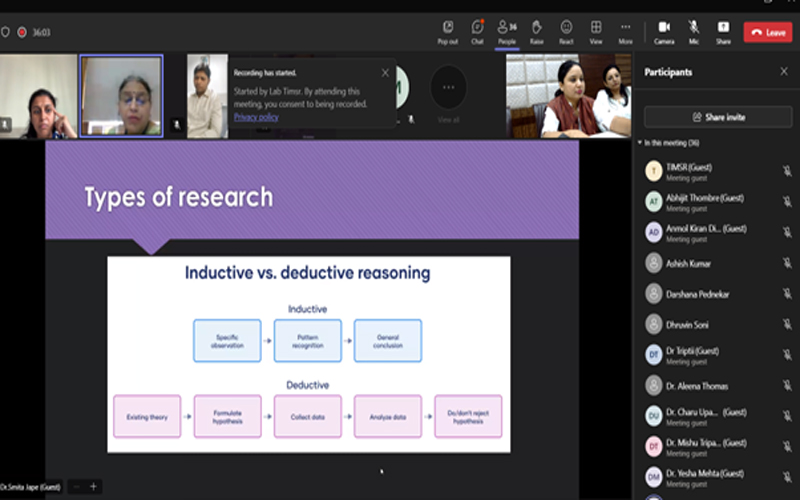
TIMSR organized a 5-day online FDP on the topic ‘Writing A category paper using Bibliometrics Analysis’ from 13th May, 2024 to 17th May, 2024 in online mode. The objective of the program was to provide systematic knowledge of research, research methodology, and its applications to faculty members. The FDP was started with an inauguration speech by Dr. Pankaj Natu, Director, TIMSR.
The first day started with a discussion with Dr Smita Jape, Associate Professor and Academic Head, Dr V.N Bedekar Institute of Management Studies, Thane. In her session, she detailed the basics of research, including selection of topics, idea generation and writing proper LR, gap identification, statement of problem, identification of variables, and model preparation based on variables.
On the second day, Dr Dinesh Sonkul, Assistant Professor, Sheila Raheja School of Business Management & Research, discussed Research methodology and questionnaire preparation with proper scaling in detail.
On the third day of the programme, Dr.Krunal Punjani, Assistant Professor, SVKM’S NMIMS, Navi Mumbai, discussed the structure, guidelines, ideas, examples and publication sources of the research articles in high-quality journals, including Q1 and ABDC.
On the fourth and fifth day of the programme, Prof. Krishnakant Lasune, Assistant Professor, Bedekar Institute of Management Studies, discussed the importance and use of bibliometric analysis using the software.
The FDP was rounded up with Questions & Answers, which provided an opportunity for the audience to connect with the speakers. The FDP concluded with a vote of thanks proposed by Dr Shamna T C, Assistant Professor, TIMSR.
Teaching Learning
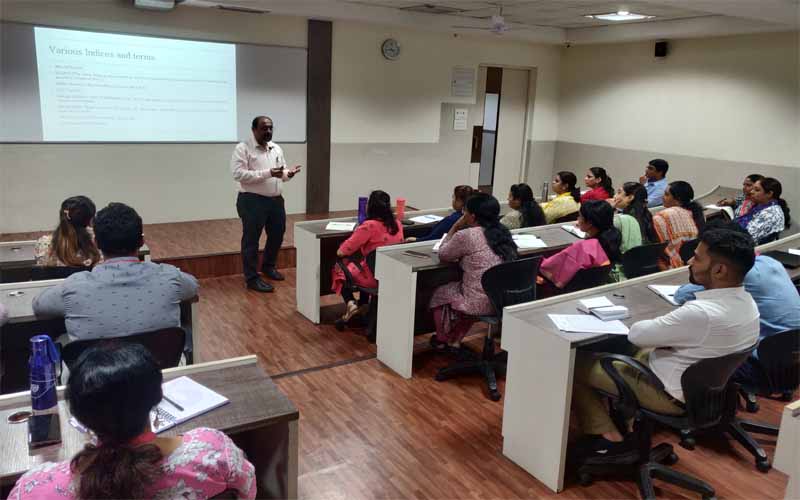
TIMSR’s Research Cell, as a part of Continuing Management Education (CME) series, organized a workshop on “Teaching Learning” on 28th February, 2024. The session was conducted by Dr.Charu Upadhyaya, Associate Professor- TIMSR. Dr. Upadhyaya started the discussion by explaining the recent changes and developments as per ISO 21001 regarding course file. She also explained the documents which are to be prepared for keeping course file ready for the particular course, mapping and justification of CO-PO, calculation of CO-PO attainment and improvement in attainment.
During the session, the queries were also addressed and the session ended with a vote of thanks.
Outcome Based Education: Recent Developments in Quality Assurance
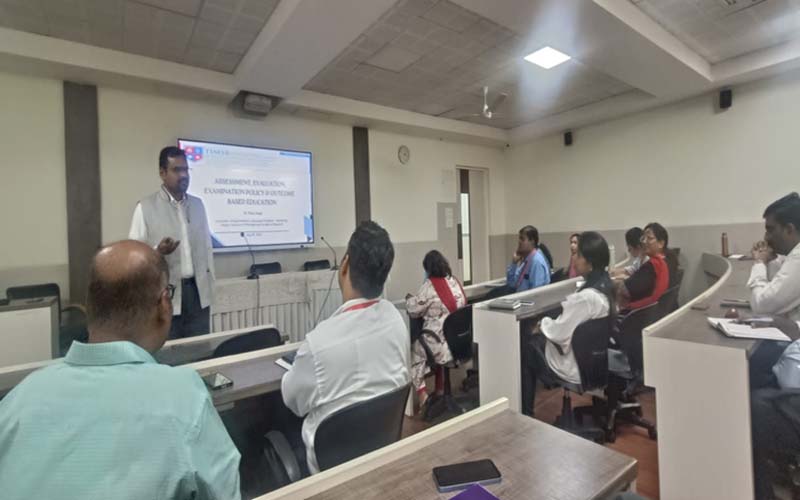
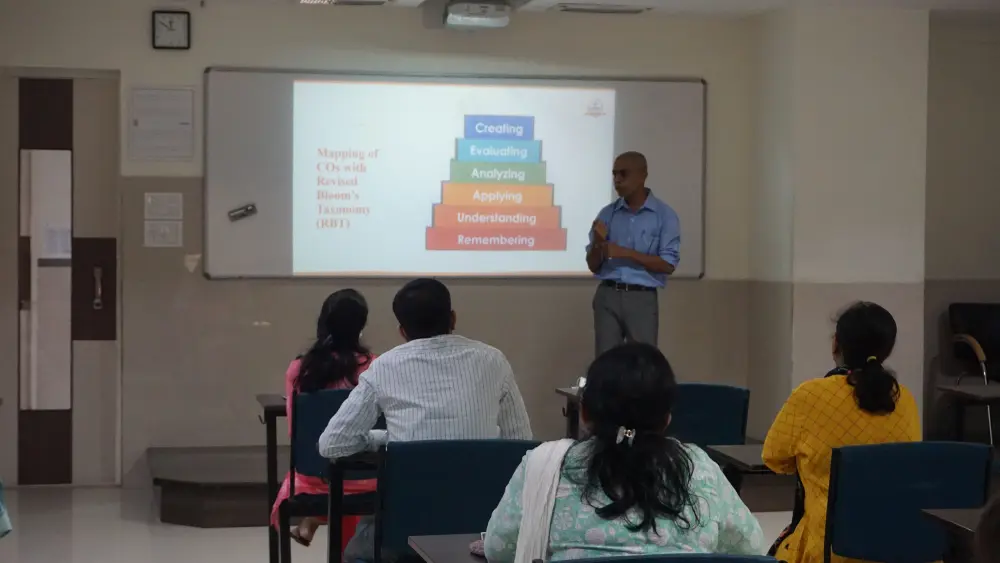
TIMSR’s Research Cell organized a workshop on “Outcome Based Education: Recent Developments in Quality Assurance” as a part of Continuing Management Education (CME) series on August 24, 2023. The session was conducted by Dr. Vishal Sandanshive, Associate Professor- TIMSR. Dr. Sandanshive started the discussion by explaining the recent developments in the OBE approach as per the new NBA manual. He also explained the mapping and justification of CO-PO, calculation of CO-PO attainment and improvement in attainment. Further, the faculty members were made familiarized with CO-PO mapping and attainment in order to enhance the quality of outcome-based education.
The session continued with a discussion on levels of Bloom’s Taxonomy and the ways to map questions with different levels on that pyramid, in order to improve the learning outcome of the students. During the session, the queries were also addressed and the session ended with a vote of thanks.
Enriching Research Profile
TIMSR’s Research Cell organized a Research Workshop on the topic “Enriching Research Profile” for the faculty members of TIMSR and TGBS on August 7, 2023. The session was conducted by Dr. Nilesh Gokhale, Director (TGBS). The session aimed to discuss the importance of research publications and how to enhance the quality of research publications. During the session, the importance of choosing the right keywords for your manuscript, targeting the right journal and different steps in preparing and publishing the manuscript were also discussed. The session was highly interactive and was well-appreciated by all the participants.
Briefing and overview of upcoming (Major/Minor) Research Projects
TIMSR’s Research Cell, as a part of the Continuing Management Education (CME) series organized a knowledge sharing session on “Briefing and overview of upcoming (Major/Minor) Research Projects” by Dr. Shebazbano Khan- (Asst. Prof) on 11th July, 2023.
During the session, faculty members were made familiarized with details in order to apply for the ICSSR Minor/Major research projects and eligibility. The session continued with a discussion on how to write a research proposal for the submission. Later on, the format and procedure of Minor/Major Research Project were also shared with all faculty members to select titles and submit the proposal for Minor/Major Research Project.
Overall, the session was highly informative and addressed the queries of the participants.
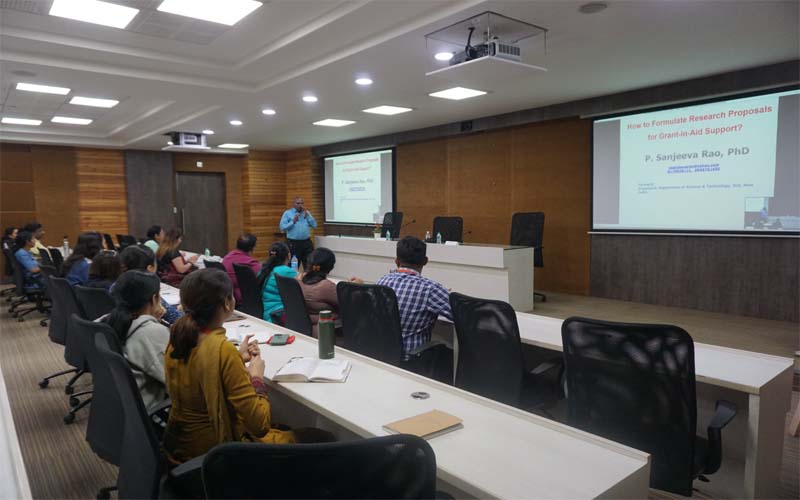
How to formulate Research Proposal for Grants & Funds
TIMSR’s Research cell organized a Research workshop on “How to formulate Research Proposal for Grants & Funds” on 25th February 2023 for the faculty members. The session focused on the importance of formulating a Research Proposal for Grants & Funds”.
Dr. P Sanjeeva Rao, Ph.D Scientist, Dept. of Science & Technology, GOI (New Delhi) was the resource person of the workshop who discussed the concept and importance of sponsored research in the management domain. He further, highlighted the sources of Research Funding and Details of Funding Agencies available in the management domain. The session was interactive and was well appreciated by all the participants and ended with a vote of Thanks.
Awareness on ICSSR (Major/Minor) Research Projects
TIMSR’s Research Cell organized a knowledge sharing session on “Awareness on ICSSR (Major/Minor) Research Projects” by Dr, Shebazbano Khan, Asst. Professor on 23rd September, 2022. The session started with discussion on process of applying ICCSR Minor project by faculty members. Faculty members were made familiarized with the details in order to apply for the projects and eligibility. Further, the session continued with a discussion on how to write research proposal for the submission. During the session, the queries were also addressed and the session ended with a vote of thanks.
Developing and Teaching Case Study
TIMSR’s Research cell organized a 5-day faculty development program on the topic “Developing and Teaching Case Study” from 21st Feb to 25th Feb 2023 in Hybrid mode for all the Management Institutes. The session focused on the importance of case study in academic career.
Dr. Srinivasan. R.Iyengar, Director & Professor, Jamnalal Bajaj Institute of Management Studies.Dr. Ranjan Chaudhari, Professor of Marketing, Indian Institute of Management, Ranchi.,Dr. Sarika Mahajan, Core Faculty, Jamnalal Bajaj Institute of Management Studies.,Dr. Farhat Mohsin, Professor, Manav Rachna International Institute of Research and Studies, were the resource persons for the Program. During the FDP, the topics such as, ‘how to develop a good case’, ‘ways to collaborate with companies’, how to get a case published in good journal’ and using case as important teaching pedagogy, were discussed. The session was interactive and was well appreciated by all the participants.
Continuing Management Education (CME)
TIMSR’s Research Cell, as a part of Continuing Management Education (CME) series, organized a knowledge-sharing session on “Dissertation Project Orientation” on 17th November, 2022. The session was conducted by Dr, Shebazbano Khan, Asst. Professor, TIMSR.
The session started with a discussion on explaining the procedure and guidelines of the “Dissertation Project” for the students of MMS (Batch 2021-23). During the session, the faculty members were reoriented with details in order to have clarity on project topics and evaluation criteria. The session continued with a discussion on improving the quality of dissertation projects by including field visits and surveys. During the session, the queries were also addressed and the session ended with a vote of thanks.
Continuing Management Education (CME)
TIMSR’s Research Cell, as a part of Continuing Management Education (CME) series, organized a knowledge-sharing session on the “Use of Bloom’s Taxonomy in designing Question paper and Assessment” on September 21, 2022. The session was conducted by Dr. Vishal Sandanshive, Associate Professor- TIMSR.
Dr. Sandanshive started the discussion by explaining the importance of Bloom’s Taxonomy in designing question papers. Further, the faculty members were made familiarized with Bloom’s Taxonomy terminologies in order to enhance the quality of outcome-based education. The session continued with a discussion on levels of Bloom’s Taxonomy and how faculty members can map questions with different levels on that pyramid, in order to improve the learning outcome of the students. During the session, the queries were also addressed and the session ended with a vote of thanks.
Sponsorship, Recognition and Award Schemes
TIMSR’s Research Cell, as a part of Continuing Management Education (CME) series organized a knowledge-sharing session on “Sponsorship, Recognition and Award Schemes” by Dr. Aastha Sharma, Asst. Professor on 18th August, 2022.
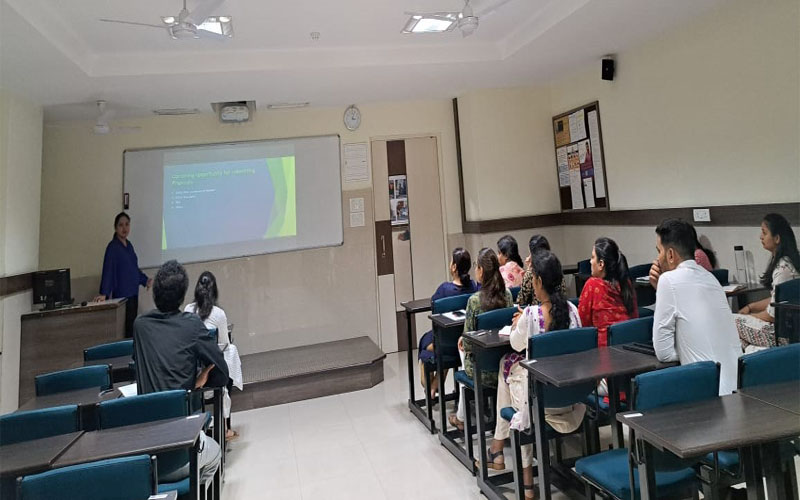
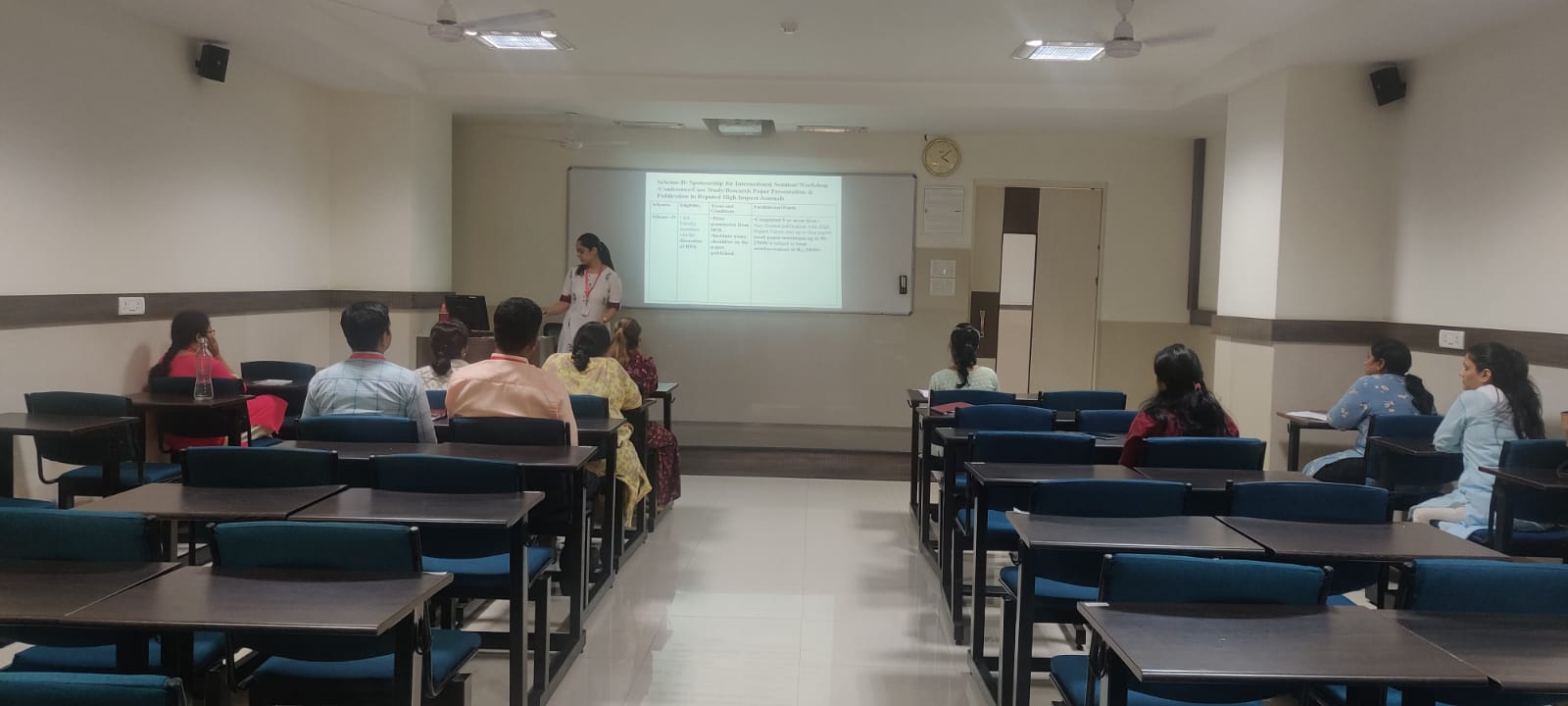
The session started with discussing eligibility criteria, terms and conditions for availing sponsorship schemes. The Faculty members were made aware of the sponsorship schemes in order to avail maximum benefit of TIMSR’s employee-centric policies to further improve their credentials. During the session, the queries were also addressed and the session ended with a vote of thanks.
Chartered Institute of Management Accounts (CIMA) FLP
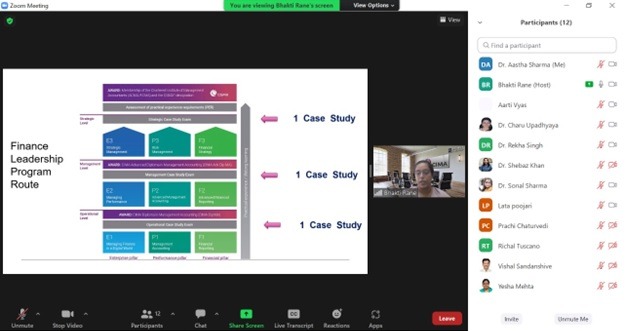
TIMSR Research Cell, as a part of Continuing Management Education (CME) series organized an awareness session on ‘Chartered Institute of Management Accounts (CIMA) FLP’ by Ms. Bhakti Rane, on 19th July, 2022.
The session started with the discussion on CIMA program wherein the faculty members were made familiarized with the program in order to educate the students and to enroll them for the specific courses offered by CIMA to improve the placement prospects of the students. During the session, the queries were also addressed and the session ended with a vote of thanks. Overall, the session was insightful and opened up multiple career opportunities in the field of management accounting.
CO-PO Awareness and Semester Plan – Peer Review
TIMSR’s Research Cell, as a part of Continuing Management Education (CME) series organized a knowledge sharing session on ‘CO-PO Awareness and Semester Plan – Peer Review’ on 2nd July, 2022. The session was conducted by Dr. Charu Upadhyaya, Asst. Professor- TIMSR. The session started with the discussion on ‘Semester Plan’ preparation by the faculty members in order to enhance the teaching-learning productivity and further continued with the discussion on CO-PO awareness and mapping of course outcome with program outcome to improve the learning outcome of the students. During the session, the queries were also addressed and the session ended with vote of thanks.
Online Faculty Development Program on “Data Analysis Using R”
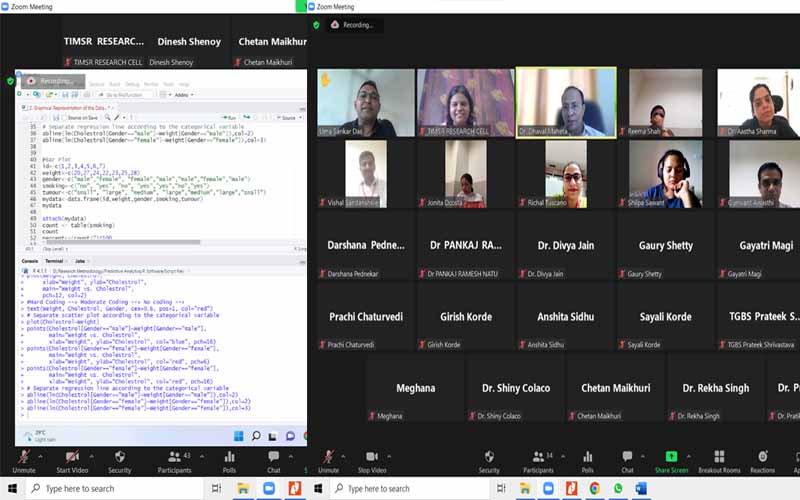
TIMSR’s Research cell organized a 7-day faculty development program on “Data Analysis Using R”, from 24th June to 30th June 2022. The session was inaugurated by Dr. Pankaj Natu, Director-TIMSR, explaining the importance of data analysis and the role of R language in research. The resource persons for the program were Dr. Dhaval Maheta, Assistant Professor- Department of Business and Industrial Management, Veer Narmad- South Gujarat University, Surat and Dr. Hitesh Parmar, Assistant Professor, Sardar Patel University, Vallabh Vidyanagar, Gujarat. The topics discussed during the workshop were Introduction to R and R Studio Data Management, Graphical Representation of the Data, Hypothesis Testing and Normality Testing, ANOVA and Regression Analysis, Parametric Test and Non-Parametric Test. A valedictory address was given by Dr. Pankaj Natu, Director, TIMSR followed with a Question & Answer session and a vote of thanks by Dr. Yesha Mehta, Assistant Professor- TIMSR.
Continuing Management Education (CME)
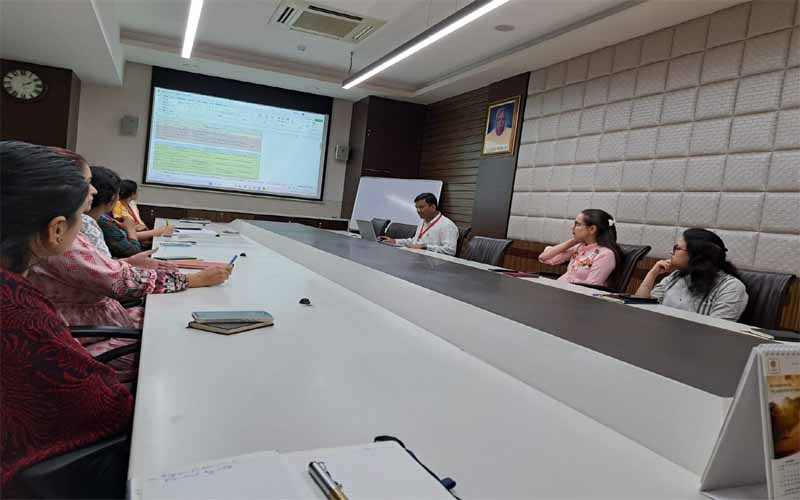
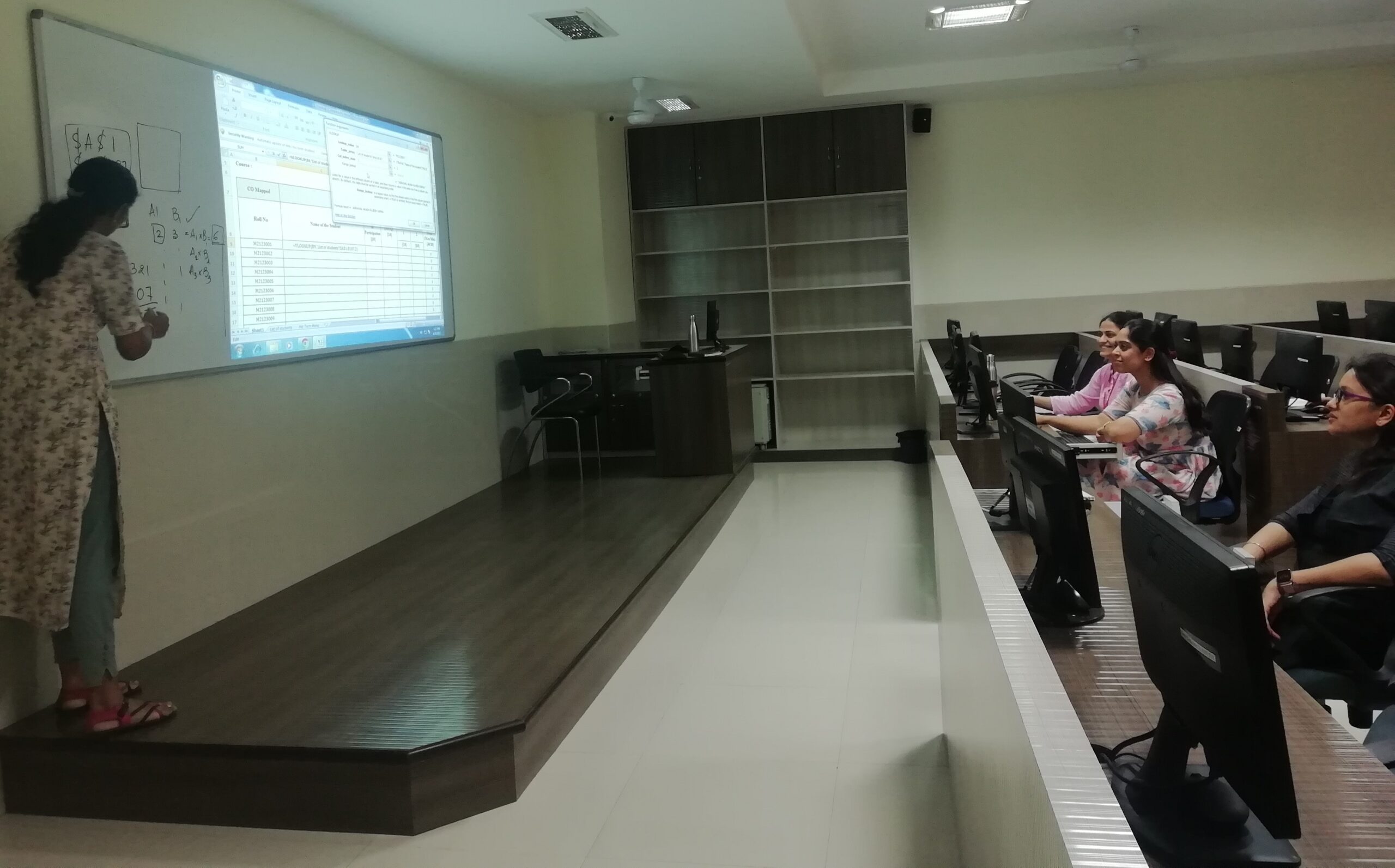
TIMSR Research Cell, as a part of Continuing Management Education (CME) series organized a knowledge sharing session for the faculty members of TIMSR on ‘Excel in Workplace” by Ms. Lata Poojari on April 25, 2022. The workshop covered the following topics such as V-lookup, pivot table, data sorting using sort and filter option and text to column. The session continued with discussion on how to take advantage of the Quick Analysis tool to get instant data analysis, creating Pivot Tables based on multiple tables, the basics of Excel Pivot Table and Pivot Chart reports. Overall, the session was very engaging and insightful.
Continuing Management Education (CME)
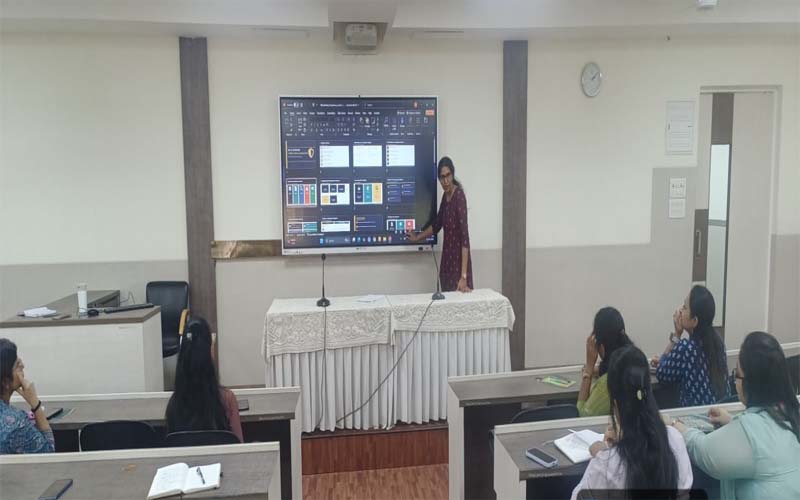
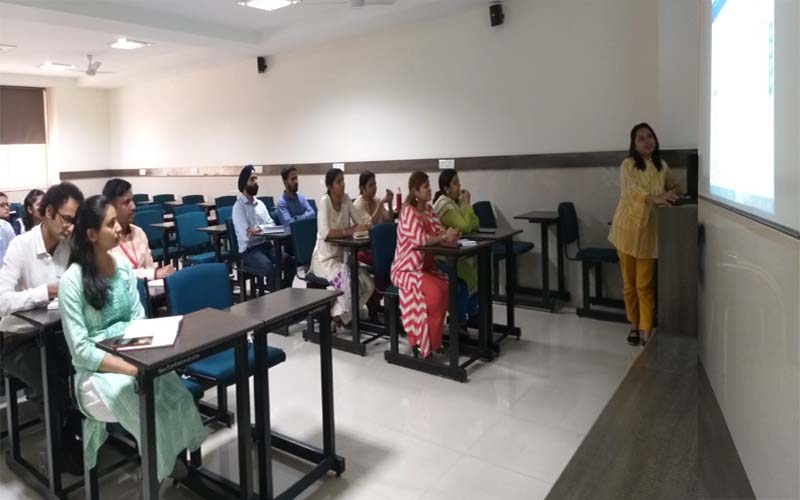
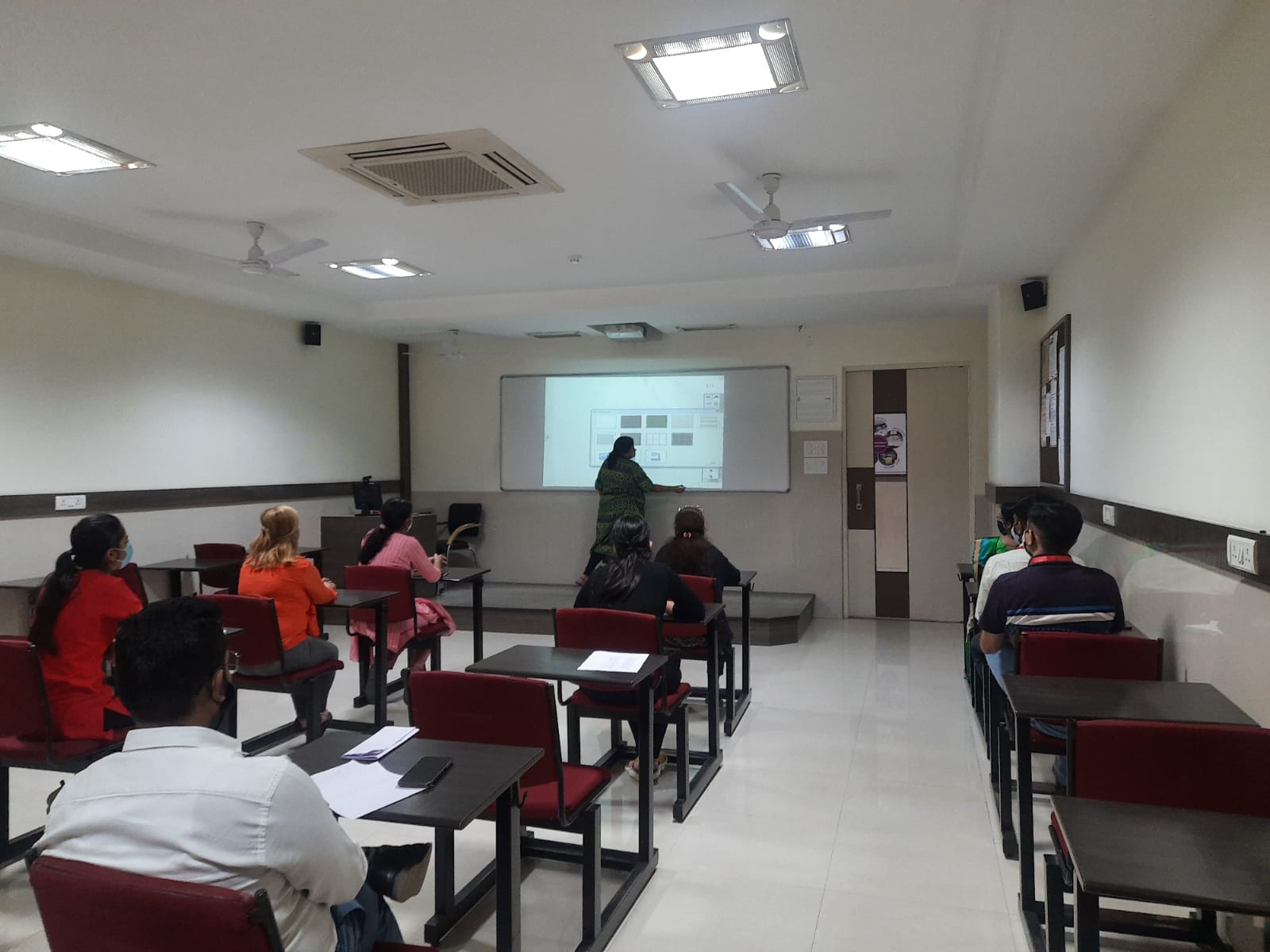
TIMSR Research Cell, as a part of Continuing Management Education (CME) series, organized a knowledge-sharing session on ‘Interactive Smartboard – an ICT tool by Dr. Yesha Mehta, Asst. Professor- TIMSR on January 22, 2022. The session started with a discussion on the importance of ICT tools as a teaching pedagogy. During the session, the participants were familiarized with various features of the Interactive Smartboard that would enrich the teaching-learning experience. Further, the session continued with a discussion on how faculty members can customize and personalize learning activities using a smartboard to address students’ diverse learning styles, working strategies and abilities using digital tools and resources.
Outcome based Education and CO-PO Attainment Process
An orientation session was conducted by Dr. Shuchi Gautam to reinforce the concept of outcome-based education and the process of CO-PO attainment levels for all faculty members of TIMSR on Thursday, 20th January 2022. During the session, the faculty members were oriented on the Comprehensive Approach of Outcome-based Education.
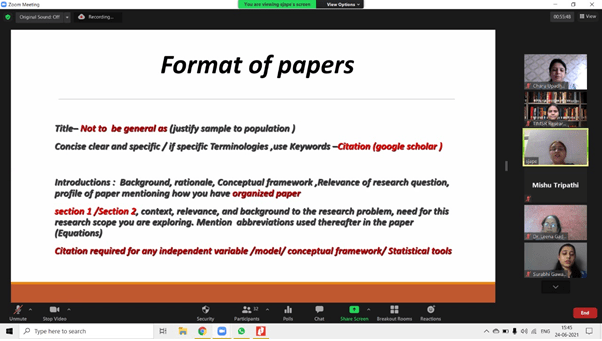
Writing High-Quality Research Papers for Scopus Indexed Journals
Research is an integral part of a successful academic career, and it is given considerable importance in all the B-schools and Universities, across all the streams. In today’s dynamic academic environment, publishing good research papers is not only a requirement but also an opportunity to flourish as a professional. TIMSR Research cell organized a five-day faculty development program on “Writing High-Quality Research Papers for Scopus Indexed Journals”, from 21st June 2021 to 25th June 2021, via an online platform, Zoom. The FDP was inaugurated by Dr. M. L. Dutt, Former Professor & Division Head, Institute of Banking & Personnel. He gave insights on the importance of writing quality research papers.
The topics discussed during the workshop were, How to finalize a Research Topic, Insights on Literature review and Introduction for a research paper, Processing data is SPSS, Exploratory factor analysis, confirmatory factor analysis, SPSS AMOS for model validation, Mediation Analysis & Academic Writing, Measuring the Quality of Research and Insights from Reviewer’s Desk of Scopus Indexed Journals. The resource persons for the program were, Dr. Smita Jape, Associate Professor; Dr. Meenakshi Malhotra, Assistant Professor; Prof. Krunal K Punjani, Assistant Professor and Prof. Mahesh Bhanushali, Assistant Professor, V.N. Bedekar Institute of Management Studies. A Valedictory address was given by Dr. Chandrahauns Chavan, Professor and Former Director of JBIMS. He expressed his views on the importance of research paper writing and the publication process. He also enlightened the participants with important tips on writing a quality research paper. The program followed with a Question & Answer session and a vote of thanks by Dr. Yesha Mehta.
Mapping of Question Paper with Course Outcome
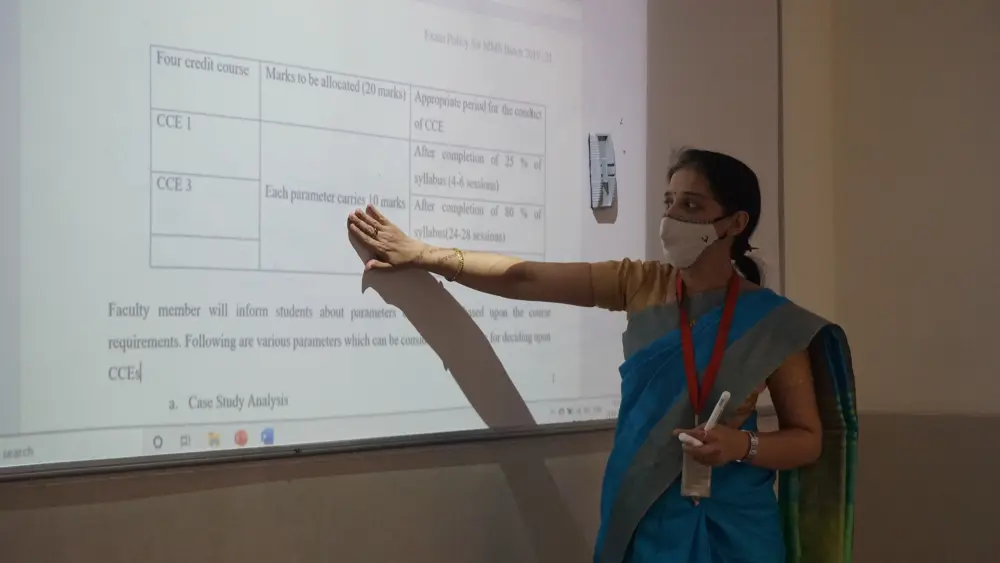
TIMSR Research cell organized a session on the topic ‘Mapping of Question Paper with Course Outcome’ on January 13, 2021, as a part of the Faculty Development Program. The session was conducted by Prof. Shraddha Luniya, (Assistant Professor) to help the faculty members to gain insights into an outcome-based education. The session started with a discussion on the structure of the question paper for the MMS program. Prof. Shradha also talked about the selection of CCE (continuous concurrent evaluation) parameters that should be in alignment with the Course Outcome (CO). She further emphasized the requirement to design the question paper by using the blooms taxonomy, in order to assess all the Course Outcomes. The session concluded with a Question & Answer session, followed by a vote of thanks.
Continuing Management Education (CME)
TIMSR Research cell, as a part of Continuing Management Education (CME) series organized a session on January 13, 2021 on the topic ‘KSA and Semester Plan’ by Dr. Yesha Mehta, Asst. Professor to help faculties gain insights into the TIMSR Teaching Learning Process and to enable them to gain an understanding about KSA – Knowledge, Skills and Attitude. The session included discussion on the structure of semester plan. Dr. Yesha mentioned that sessions and semester plan must have an appropriate mix of seminars, group discussions, presentations, case studies, class tests and internal assignments, etc. to ensure the best delivery of the syllabus to enable participative learning, critical and problem-solving skills in the students. The session followed with Q & A and vote of thanks.
Awareness on CO – PO and Rubrics
TIMSR Research cell organized a session on the topic “Awareness on CO – PO and Rubrics” on January 12, 2021, as a part of the Faculty Development Program. The session was conducted by Dr. Sushil Kumar Pare, (Associate Professor) to help the faculty members to gain insights into the outcome-based education. The session included the discussion on the Context of Blooms Taxonomy, Mapping of Bloom’s Taxonomy with Course Outcome and Mapping and Attainment of Program Outcomes and Course Outcome. Dr. Pare further discussed Rubrics for all assessment tools. The session concluded with a Question & Answer session followed by a vote of thanks.
Continuing Management Education (CME)
The case method of teaching has gained popularity in several management and professional disciplines and has become an integral part of the pedagogy. It prepares student to step into real life situations, analyze circumstances and take decisions. This reinforces the further need to design and develop case studies by faculties. TIMSR Research Cell, as a part of Continuing Management Education (CME) series organized a knowledge sharing session on ‘Case Writing Workshop’ by Dr. Yesha Mehta, Asst.Professor on January 12, 2021. The session included a discussion on how to write a case and teaching notes. Further, there was discussion on how the faculty should use or teach the case in a class. The session followed with Q & A and vote of thanks.
Online Faculty Development Program (O-FDP) on Digital Education Tools
VUCA world has made it mandatory for everyone to enrich their technical skills to utilize technology optimally. There are several ways teachers can utilize the technology and resources already available to support online learning and ensure students receive a quality education. Larger understanding of technology enables designing class by blending technology and knowledge at the same time engaging students in step by step learning process.
TIMSR’s Research cell organized a five-day faculty development program on “Digital Education Tools for Teaching” from June 23-27, 2020. The FDP discussed about how online learning can be made more engaging and interesting, how to design the lessons using various online tools for conducting activities and tracking the performance of the students.
The FDP started with discussion of nuances on online teaching. The resource persons for the program were: Dr. Chandrakant Varma, Associate Professor, Prof. Jaideep Dasgupta, Asst.Professor and Dr. Yesha Mehta, Assistant Professor. The participants were given exposure to Zoom, Google forms and quiz, TED-ED and Hot Potatoes. The programme incorporated both theoretical components as well as rigorous hands-on practical training sessions.
Continuing Management Education (CME)
The Continuing Management Session (CME) for all the faculties was held on January 9th, 2020 and was conducted by Prof. Sushil Kumar Pare, Associate Professor, Marketing. The session was designed to motivate the faculties to publish quality journals within a specific time frame and to highlight the importance of finding the right journal for any research work. Suitable techniques were taught for finding the right journal along with discussions on the concepts of Indexes and Citation. The publication databases were distributed to faculty members post the session.
Writing Quality Research Paper with High Impact
Thakur Institute of Management Studies and Research organised a faculty development program based on high impact publishing for its faculty on 22nd November 2019. The resource person Mr Ajay Saraf, trainer from Excel Consulting discussed the various components of the high impact research papers. He also helped the faculty members in selecting their topics for a high impact paper and then he demonstrated how a topic would lead to the objectives for a quality research paper.
Continuing Management Education (CME)
Dr. Leena Gadkari conducted a Continuing Management Education (CME) session for faculty members on 10th April, 2019 to share the inputs received in the workshop organised by the University of Mumbai on the topic ‘Research Methodology’. The topics covered included components of research paper, introduction, literature review, objectives, hypothesis, methodology, sampling, conclusion, and referencing.
Aligning Technology to Learning Purpose
Dr. Kiran Kakade, Assistant Professor, HR Department, on “Aligning Technology to Learning Purpose” on March 02, 2019. The session outlined the content that helped faculty to learn Bloom’s Taxonomy, aligning course objective with Bloom’s Taxonomy, aligning ICT tools with Bloom’s Taxonomy in teaching pedagogy.
Clarivate Analytics
Dr Subhasree Nag, Solution Consultant, Life Sciences and Scientific Research at Clarivate Analytics came to TCSC campus to address the faculty on 1st Feb 2019. The session was coordinated by TIMSR research cell.The key points were utility of web of science, endnote and journal citation report for researchers. She accentuated the Role of Web of Science in Research and Publishing including literature review, research trends and research collaborations.
Learning Management Systems
An FDP was conducted on “Learning Management Systems” by Dr.Kiran Kakade, Assistant Professor, HR Department, TIMSR on 16th January 2019. The session outlined the content about instructional technologies including learning management system using MOODLE.
ISO Awareness Session
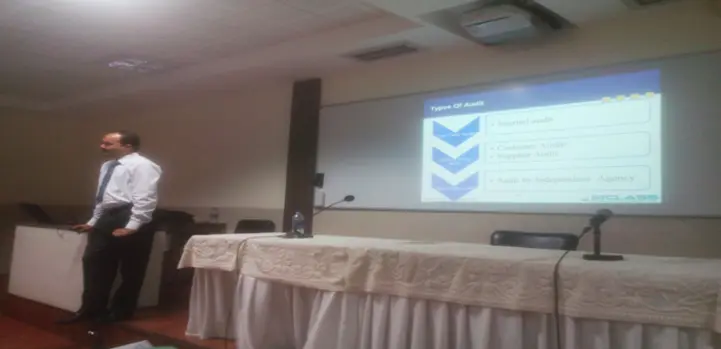
The ISO 9001:2015 awareness session for faculty and staff was organised on 6th September, 2018. The aim of the session was to create an awareness of ‘How to conduct an effective ISO audit’. The Resource person, Ms Payel Saha (MR-TCET) gave a broad overview of the ISO 9001: 2015 requirements wherein she covered salient aspects such as process driven & risk based approach, requirement in respect of risk mitigation and document maintenance. Participants were made aware of the various clauses of ISO 9001:2015 standard. Thereafter the team members from TCET Prof. Sukruti Kaulgud, Prof. Kalavati Patil, Mr. Uday Waskar showed a role play of ‘How to conduct an effective ISO audit’.
Faculty and staff members were able to:- Know the various clauses and requirements as per ISO 9001: 2015
- Understand the way to conduct an effective internal audit of ISO
Toxic Emotions at workplace: its effects on physical and Mental health
TIMSR organized an FDP on 29/09/18. The objective of this event was to develop a sense of awareness towards the Toxic Emotions at workplace: its effects on physical and Mental health. The teaching and non-teaching staff got aware of the side effects of the negative emotions on physical and mental health of the individual. Dr. Pradnya Nagle, a physician having more than 15 years of experience delivered the session and made the audience aware about the technical glimpses of the medical science attached to the emotional trauma and how it effects human body.
One-week Erasmus programme at UPCT, Spain from 23rd October to 28th October 2017
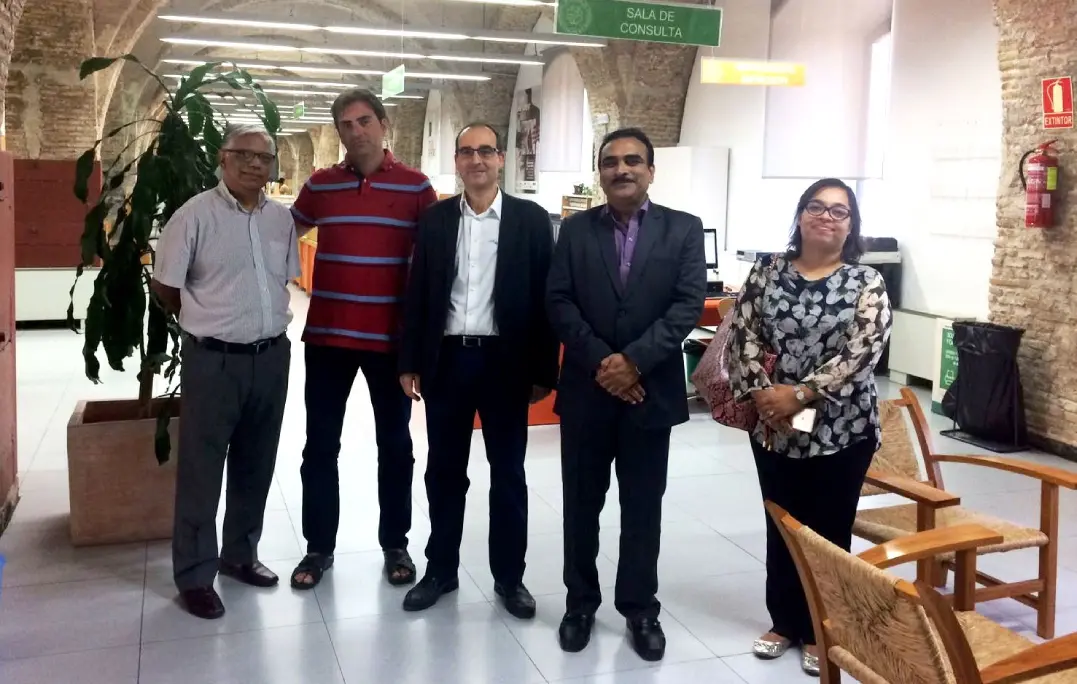
Dr Ramakumar Ambatipudi, Director TIMSR and Prof Medha Bakhshi, Head GM Dept, attended a one-week Erasmus programme at UPCT, Spain from 23rd October to 28th October 2017. The visit provided avenues of exchanging ideas and fostering collaboration in joint ventures pertaining to teaching, training and research. It also provided an insight into programme design and structure in the European context and B-school mandates in the global context.
ISO 9001:2015 Transitional Training for Auditors
TIMSR organized an FDP “ISO 9001:2015 Transitional training for Auditors” on 3rd and 4th July 2017 for Teaching and Non teaching staff. The Resource person for the training program was Mr Amod Deshpande from IRQS. Objective of the training was to make staff aware and competent for implementation of ISO 9001:2015 standards for the continual improvement. Participants were made aware of various new clauses of ISO 9001:2015 standard. Various activities were conducted to understand the practical implementation of ISO clauses, conducting internal audits as per 2015 standards etc.
ISO 9001:2008 Awareness Training Programme
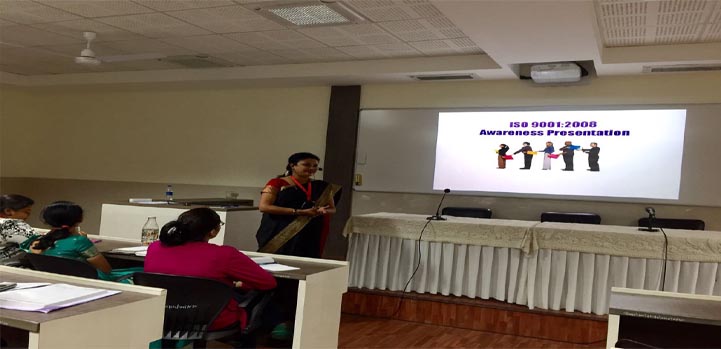
ISO 9001:2008 awareness training programme for faculty and staff was organised on 4th February 2017. The Resource person for the programme was Ms Payel Saha (MR-TCET). Training programme was designed to help demonstrate commitment to quality and customer satisfaction as well as continuously improving our quality management systems (QMS). This training aimed to create awareness within the organization regarding various basic requirements and provide significant exposure on how these requirements can be interpreted to suit the organization’s processes, products, people and customers. Insights were shared on various quality improvement issues through various case studies and examples.
Digital Transformation of Business
TIMSR organized an FDP on 27th January, 2017.
Objectives of the Event
- To highlight the digital transformation trends in education
- To discuss the changes in teaching learning process based on digital aspects
- To actively collaborate with other institutes of repute in all academic activities
Learning Outcomes
- Different stages of digital transformation in business
- Digital transformation in class room teaching
- Different modes, tools and method to be used in digital classroom to gain impactful teaching and learning process
How to Master the Secrets of Charismatic Leadership
A Faculty Development Programme on “How to Master the Secrets of Charismatic Leadership” was conducted on January 22, 2017. The training partner for the event was Dale Carnegie and the resource person was Mr.Isar Qureshi. The purpose of the programme was to develop initiative of leadership by providing inputs for effective teamwork and to encourage every member of team to find their unique contribution needed in the world of education. It was a participative workshop replete with live examples, group discussions and team activities.
How to write a book
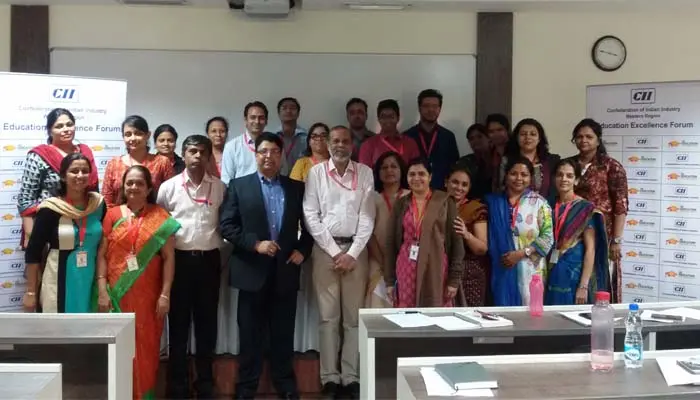
A Faculty Development Programme on “How to write a book” was conducted on 20th January, 2016 in association with Confederation of Indian Industry (CII) . The objective of the programme was to enable the faculty members to understand the basics of how to write a book. The resource person for the programme was Mr. Sumantra Sen CEO JSW Foundation. He discussed the significance of researching and networking to realize the effectiveness of the topic. He also stated that an individual needs to understand why he needs to write a book. Overall the FDP was very interactive and informative on how to build content and connect with right people.
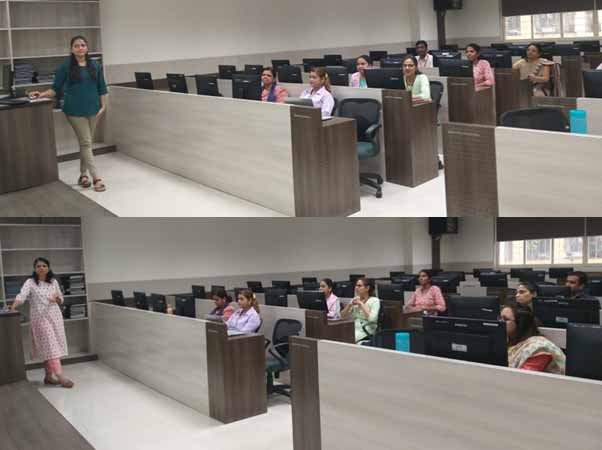
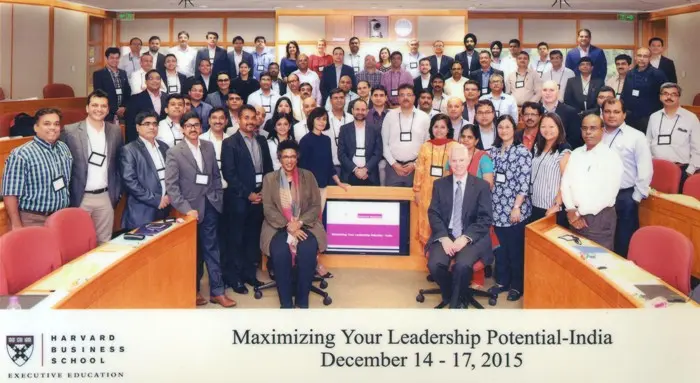
Maximizing Your Leadership-India December 2015.
Prof. Dipaali Pulekar Selected and Successfully graduated from 4 days residential Business Executive Education Programme on Maximizing Your Leadership Protential at Harvard Business School, India.
How to write a research paper
A Faculty Development Programme on “ How to write a research paper” was conducted on 31st Oct 2015. The objective of the programme was to enable the faculty members to understand how to design hypothesis while writing research papers and the various statistical tools that can be used for analyzing the data.
The resource person for the programme was Dr M L Dutt,Professor & Div Head, R & D, Institute of Banking Personnel Selection. He also explained the importance of research in academics and discussed the importance of choosing the right method of analysis of data. Overall the FDP was very interactive and instrumental in enlightening the faculty with the knowledge on abstract building and data collection methods.
Designing Hypothesis and selection of statistical tool
A Faculty Development Programme on “Designing Hypothesis and selection of statistical tool” was conducted on 21st April, 2015. The objective of the programme was to enable the faculty members to understand how to design hypothesis while writing research papers and the various statistical tools that can be used for analyzing the data.
The resource person for the programme was Dr. Koilakuntla Maddulety, Associate Professor, NITIE. The programme covered topics like types of hypothesis, types of test like mean, chi-square, standard deviation, z test and t test. He also explained about Minitab statistics software and how to estimate sample size while doing research. Overall the FDP was very interactive and instrumental in enlightening the faculty with the research hypothesis and Statistical tools.
Methods for testing Hypothesis and data analysis with SPSS
A Faculty Development Programme on “Methods for testing Hypothesis and data analysis with SPSS” was conducted on 18th December, 2014. The objective of the programme was to enable the faculty members to understand the research testing methods and analysis with SPSS and to make them understand the recent advances in Management research.
The resource person for the programme was Dr.Sachin.S.Kamble, Associate Professor, NITIE. The programme covered topics like gap analysis, types of scaling and testing of hypothesis with SPSS.
The resource person illustrated some of the data analysis techniques that can be used with an example. Overall the FDP was very interactive and instrumental in enlightening the faculty with the research testing methods using SPSS.
Career Development Opportunities for B-school
Career Development Opportunities for B-school Faculty was conducted on 09th April, 2014. The resource person for the programme was Dr.T Prasad, Associate Professor, NITIE. The programme covered topics like career path for a B-school faculty, use of technology in teaching, live projects and consultancy. The FDP was very interactive and was instrumental in enlightening the faculty about their role clarity, teaching pedagogy and the recent advancements in management education.
Case Study Teaching and Writing
Case Study Teaching and Writing was conducted on 6th and 7th December, 2013. The objective of the programme was to enable faculty members to simulate corporate reality in the classroom and to plan and execute successful case discussions working with the unique dynamics of the case and finally to learn case writing techniques to develop field-based cases. The resource people for the programme were:
- Dr.Dilip M Sarwate, Certified Management Consultant and Visiting faculty, Pune.
- Dr.Neeraj Pandey, Assistant Professor, NITIE, Mumbai.
- Mr.Vijay Bhandari, Management Consultant and Visiting faculty, Mumbai.